Tuesday, April 16, 2013

Former Atheist Declares: "Save Send Delete" Is a Wonder to Read, Brilliant, I can hardly think of a book that I want to have better known

Source

Today, April 16, 2013, like so many other people, I anxiously await identification of a suspect and a motive in the bombing of the Boston Marathon yesterday. I hope I can be forgiven, at this tense and sad moment, for posting a positive review of "Save Send Delete."

Jeff Miller is a former atheist who after spending forty years in the wilderness finds himself with both astonishment and joy a member of the Catholic Church. A retired Navy Chief who now makes his living as an application developer.

Jeff Miller's blog is The Curt Jester. From The Curt Jester, April 15, 2013

"The premise of 'Save Send Delete' is that it details a series of emails to a famous atheist. Mira after having seen this famous atheist on a Bill Moyer's show on PBS decides to email him…

The book goes on where you only see her emails to this famous atheist intermixed with some to her friend. The 'Save Send Delete' refers to the end of each email where one of these words is bolded. This is a rather clever idea and you get an idea of a thought process of initial reaction, revising, changing your mind about what you said, or committing to reply. But this goes on beyond just being clever as it really adding to the narrative of the story…

The often long emails that take so many divergent paths are a wonder to read. They are so funny, pointed, and filled with the realities of life. Political correctness has not only taken a vacation, but I think had run away in alarm. This is not common apologist fare, but a look at the reality of the faith. The 'famous atheist' replies (as we draw from context) some of the standard objections and she calls him on the vapidness of some of these arguments.

For example the 'Your Catholic because you were raised that way and plus you don't know other faiths' argument. Sometimes in more dissenting publications you see an argument of 'Lived experience' as if it was a trump card to the truth. Yet here Mira's 'lived experience' is an argument for the faith and the life she has lived across the world. It also draws from a wealth of information culturally and historically. Strangely at times it even reminded me of Fr. George Rutlerand the wealth of information he draws from when he writes, that is is Fr. Rutler was a bit coarser and swore.

These series of letters are just a wonder to read on so many levels. I was so drawn into the book that time and time again I forgot that Mira was a character in the story. Sure a good novel draws you in, but this was beyond that. In just so many ways this novel is brilliant. The relationship between Mira and 'Rand' the atheist goes from back and froth from adversarial to common ground respect. What also adds to this novel is that while Mira is arguing for the faith, she has her own difficulties and fallenness. She struggles in her faith while knowing it is true. Her correspondence with 'Rand' brings out the desire to be a better Christian.

'Inhale as a believer, exhale as an atheist'

Mira's struggles are indicative of this phrase she uses. In some ways this is a theme of the book, but not without hope. It brought to my mind the quote 'Be pitiful, for every man is fighting a hard battle,.' There is a inner battle going on in both Mia and Rand. The novel also really brought to mind the reality of that quote to something more palpable to me. Are intellects can apprehend a truth while still not fully taking it in.

There are aspects of this book that would have annoyed me if this was a lesser novel. Mia is not the perfectly faithful Catholic as she alludes once to supporting women's ordination and seemingly homosexual acts. Again I had totally forgotten that Mia was a character in a book. But even this was I think a part of the 'Inhale as a believer, exhale as an atheist.'

I wish I had the skill to describe how good this book is and it has been one that gave me a lot to reflect upon. It is not the type of book you just put down after finishing it, because you are just not done digesting it yet. While I have very little impact on what books get better known, I can hardly think of a book that I want to have better known. It deserves all the attention it can get."

Sunday, April 14, 2013

Bulletproof Vests, Freedom of Speech, Pam Geller, The Southern Poverty Law Center, and What Are We Doing in Afghanistan?

Do these folks scare you? Do they look like Nazis or KKK to you? Long Island Great Neck Chabad. Source

Pamela Geller blogs about Islam. She was recently invited to speak at the Great Neck Synagogue. Amidst threats, the synagogue had to cancel for security reasons. At the last minute, the Great Neck Chabad offered Geller a space to speak. Thanks to friends Patti York and Annette Skelton, I attended that talk today, April 14, 2013.

In 2011, the Southern Poverty Law Center named Pamela Geller as an official hater, along with the Ku Klux Klan and Neo-Nazis.

Think about it.

For generations, the KKK terrorized and murdered African Americans, Jews, Catholics, and immigrants. They mutilated and lynched thousands. Nazis sparked a war that killed sixty million people. Pamela Geller writes a blog that criticizes jihad and gender apartheid. Why does the Southern Poverty Law Center group Pamela Geller with the KKK and neo-Nazis?

I went to the Southern Poverty Law Center website and read what it had to say about Pamela Geller. The Southern Poverty Law Center refers to Pamela Geller as "shrill," "coarse," "stupid" and "flamboyant." They accuse her of being a "well-to-do Long Island housewife" who received a multi-million dollar divorce settlement. Geller is also criticized for her support of Israel.

I was shocked by the Southern Poverty Law Center's page on Pamela Geller. "Shrill," "flamboyant," "coarse" ""housewife" "million dollar divorce settlement" – it's a misogynist, ad hominem, trivial, tabloid-style attack. The Nazis murdered six million Jews and five million non-Jews in concentration camps; The Southern Poverty Law Center doesn't like how Pam Geller dresses. What kind of mind, what system of ethics, lumps these together?

***

I don't know if the Southern Poverty Law Center will come after me. I'm not a rich housewife, and I don't live on Long Island.

But, in my own small way, I do criticize jihad and gender apartheid.

I make it clear, every time I do that, that I am not criticizing Muslims. I grew up with Muslims, and I live alongside Muslims now. I've had Muslim friends, boyfriends, bosses, coworkers, and students. I talk about this in "Save Send Delete." I grew up in Passaic County, which has one of America's largest Muslim populations. I didn't learn about jihad from a book; I learned about it from a friend, Narin, who sat next to me in class. One spring day, she turned to me and said, "You know, when the time for jihad comes, I will have to kill you."

I feel about my Muslim friends and Islam the way I felt about my communist relatives and the Soviet Union. I had relatives in the Old Country who were communist. I loved them, but rejected and critiqued their system.

So, no, I don't think that Pamela Geller's criticisms of jihad and anti-Semitism qualify her to be in the same category as Nazis, any more than the New York Times' exhaustive and highly enthusiastic coverage of my own church, the Catholic Church's, many failings qualify the New York Times to be named a hate group.

***

Patti York, Annette Skelton, and I drove to Great Neck, Long Island today in order that we could attend Pamela Geller's talk at the Chabad there. There was a frisson of excitement as we passed uniformed police officers and at least one man in a bulletproof vest. Our picture IDs were photographed and my backpack was searched.

I have to say that the talk that I won't soon forget was not by Pamela Geller. I mean no disrespect to Geller.

The father of Marine Lance Corporal Greg Buckley Junior spoke. He made me cry, and his words will haunt me for a long time.

Mr. Buckley spoke of his son, Greg's, first day in kindergarten. He was so excited, he was jumping up and down. He couldn't wait to board the school bus. "He jumped on that bus like a man." Then he turned around and asked his dad, "Will you be here when I get back?"

Yes, his dad assured him. I will always be with you.

When 9-11 happened, and everyone was leaving the city, Mr Buckley went in to the city, to help. That's what an American does, Mr. Buckley said. "If we all stood up and did the right thing, the world would be a better place."

Greg junior wanted to join the armed forces, in order to serve his country.

Greg phoned and wrote home about conditions in Afghanistan. I shouldn't be here, he told his dad. I can't defend myself. I can't defend my brothers. They don't want us here. I am in hell. I'm training these people (Afghani police officers) to murder us.

Greg reported that Americans had been told to abide my local customs. This included never shaking hands with Afghanis. This included turning a blind eye to the Afghani custom of powerful men taking boys as sex slaves, called tea boys. (See this wikipedia page about bacha bazi. Or this article about Afghan pedophilia. Or this article from the Guardian UK.)

"Behind every good man is a woman," Mr. Buckley said. He mentioned the women who have had a positive impact on his own life. He ventured that suppression of women in Afghanistan has had a negative impact on the culture.

Mr. Buckley spoke of his son's repeated communications of alarm.

One day those communications proved true. Marine Lance Corporal Greg Buckley Jr. was murdered by fifteen-year-old Aynoddin, a "tea boy."

Here's how the Washington Post described the murder:

"The teenage assailant who killed three Marines last week on a U.S. military base in southern Afghanistan had easy access to the weapons arsenal of the Afghan police. He was in near-constant contact with U.S. troops, often when they were without their guns and body armor. But although Aynoddin, 15, lived among American and Afghan security forces, he was not a soldier or a police officer. He had never been vetted. According to U.S. and Afghan officials, his role on base was hardly formal: He was the unpaid, underage personal assistant of the district police chief."

It appears that "unpaid, underage personal assistant" is a euphemism. As Mr. Buckley said, in accord with new US government policies, we must not speak plainly about Afghan customs.

Mr. Buckley's talk wrecked me.

Pamela Geller spoke about her bus ads campaign. Her comments were straightforward. She mentioned a campaign by the Council on American Islamic Relations, or CAIR, to give people the impression that the word "jihad" means self-improvement. In fact that's not what "jihad" means. Please see Bernard Lewis' discussion of the word "jihad" in his book "The Crisis of Islam." You can see it online, at Google books, here.

Geller responded to misinformation about what the word "jihad" means with a bus ad campaign of her own. Her campaign includes quotes by prominent Muslims defining "jihad" in its traditional sense.

Geller never engaged in hate speech. She did not demonize all Muslims. She emphasized that Muslims themselves have been victimized by extremists. She advocated no violent action against Muslims. In fact, Mr. Buckley, who spoke before Geller, recommended the withdrawal of US troops from Afghanistan.

It is a criminal absurdity that the Southern Poverty Law Center and others have branded Pamela Geller as a hate group leader. It is entirely appropriate to criticize violent jihad.

To those who insist that it is somehow wrong to criticize violent jihad – and yet entirely appropriate to criticize, for example, my own church's, the Catholic church's many failings – I say to you, as Henry David Thoreau said to Ralph Waldo Emerson, "What are you doing out there?" What are you doing supporting violent jihad?

Friday, April 12, 2013

Catholics, Atheists, Censorship and the Shroud of Turin: Who Censored Whom?

It's a popular lie:
Christians are stupid people who censor truth;
scientists are all atheists and they all encourage discovery.
source
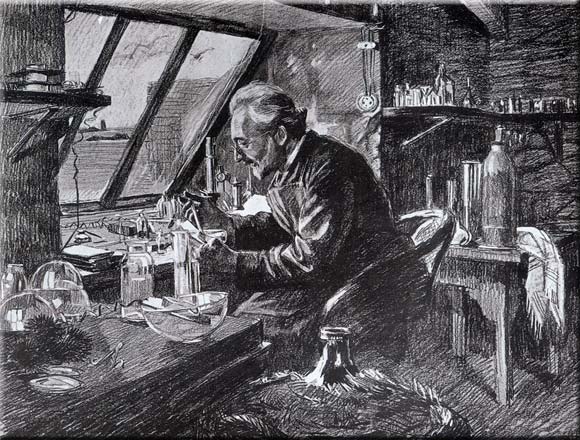
Yves Delage, who argued for the authenticity of the Shroud of Turin -- and who was censored by atheist scientists. Source

It always drives me a little crazy when the popular press repeats this old misconception about the Shroud of Turin: "irrational, devout Catholics believe the Shroud was the burial cloth of Jesus, but scientists and other rational people have proven it to be a forgery."

I'm Catholic and I know that most Catholics have either never heard of the Shroud of Turin or are only vaguely aware of its existence and don't think or care about it much.

Scientists are the ones who have obsessed on the Shroud, because its unique features make it a mind boggling puzzle worthy of their obsession.

I'm reading Thomas de Wesselow's "The Sign: The Shroud of Turin and the Secret of the Resurrection." I'm only just beginning the book. I think de Wesselow is an atheist who believes that the Shroud is the genuine burial cloth of Jesus, and I think he plans to use its genuineness to debunk Christianity. But I haven't gotten that far into the book yet.

I just wanted to report on this detail I wasn't aware of till reading this book.

The Shroud was a more or less forgotten, local phenomenon until Italian photographer Secondo Pia photographed the Shroud in 1898. Pia's photographs revealed what most today think of as the Shroud image. Seen with the naked eye, the Shroud is a vaguely smudged piece of linen. It's only the photographic negative that presents the excruciatingly detailed, positive image of a crucified man. Pia's 1898 photographic negative caused a sensation. It is that photograph that has inspired subsequent Shroud scholarship.

Some were ready to declare the Shroud genuine. Contrary to popular stereotypes of stupid, unquestioning Christians who suppress information and brave, questioning scientists, according to de Wesselow, the prominent voice arguing against the Shroud's authenticity was a Catholic cleric. The prominent voice arguing for the Shroud's authenticity was an agnostic scientist. The church published the cleric's protestations, while atheist scientists suppressed the agnostic scientist's work!

De Wesselow writes, "Surprisingly, the chief spokesman for the opposition came from the Catholic Church. Canon Ulysse Chevalier wrote a series of pamphlets on the Shroud …Chevalier concluded that the Shroud could not be a genuine relic and that it must have been 'cunningly painted'…this was the conclusion that the academic establishment desired, and Chevalier was rewarded with a gold medal by the Academie des Inscriptions et Belles-lettres. To this day Chevalier's opinions underpin the presumption that the Shroud is a fake."

Who came to the defense of the Shroud? A scientist and an agnostic.

"One man was not so easily persuaded. Yves Delage was a distinguished scientist at the Sorbonne, a zoologist and a biologist with a particular interest in the topic of evolution. He was an avowed agnostic, both before and after his involvement with the Shroud. Viewing the image as an experienced anatomist, he was impressed by its extraordinarily lifelike quality. In 1900, he showed Pia's photographs to Paul Vignon, who immediately embarked on a scientific investigation of the image…in 1902 the Sorbonne professor presented a paper on the Shroud to the French Academy of Sciences in Paris, in which he argued that its image was medically accurate, and that it could not be a painting. He concluded, on scientific and historical grounds, that the relic was probably authentic, that it was indeed the winding sheet of Jesus.

Although Delage made it clear that he did not regard Jesus as the resurrected Son of God, his paper upset the atheists members of the Academy, who prevented its publication. This act of scientific censorship marks the beginning of the academic refusal even to discuss the origin of the Shroud." Delage wrote a letter protesting the atheists' censorship of his work. "I consider Christ as a historical personage and I do not see why anyone should be scandalized that there exists a material trace of his existence."

Thursday, April 11, 2013

Ringwood Public Library Talk. Saturday, May 18 at 12:30 pm


I'll be reading from "Save Send Delete" and offering a workshop for writers on Saturday, May 18th, at 12:30 pm, at the very lovely Ringwood Public Library. Please come!

"Save Send Delete" is the true story of my email debate about God, and love affair, with a prominent atheist I saw on TV. He knows about the book but he would prefer that I not reveal his identity.

For me as a writer, that need for discretion presented a big challenge. "Save Send Delete" consists of our emails back and forth. If this is a true debate, would it not be necessary to publish his posts arguing against the existence of God, as well as my own, arguing for the existence of God? If this is a love story, without his emails, how could I make the character Rand come alive to my readers? How could I make my readers care about these characters' love?

Here is my writer's solution to this writer's problem. "Save Send Delete" presents Rand's side of the debate in Mira's reactions to what Rand says. SSD lets the reader get to know Rand through Mira's reaction to him.

For most readers, this has worked. Most readers have told me that they have a very strong sense of who Rand is and what Rand says. In fact, some readers have enjoyed that aspect of the book. Learning about a character strictly through others' reactions to that character is a unique reading experience.

Sometimes writers can fall into a rut. We find ourselves describing a character in the same old ways. Adjectives: She was beautiful; he was handsome. Clothes: she wore Prada; he wore Goodwill. Occupation: she was a district attorney; he was a fifth grade teacher. Since the reader has read sentences like that a thousand times before, these descriptions don't stimulate the reader as much as they might. Also, our own minds and creative abilities are not stimulated. We've written these sentences many times before.

I plan to read a very brief excerpt from "Save Send Delete" that demonstrates how the book lets the reader get to know Rand through Mira's reaction to him. Then I will offer some writing prompts that I hope will help workshop attendees, and their readers, to discover new, untapped ways to get in touch with their characters.

Tuesday, April 9, 2013

Sex for Sale, Neighborhood Ruined, Federal Dollars Squandered in Paterson, NJ


If what you read here about your tax dollars wasted and a neighborhood ruined concerns you, please consider sending a brief email to Paterson, NJ Mayor Jeffrey Jones, and Congressman Bill Pascrell:

Contact Mayor Jeffrey Jones at mayorjones@patersonnj.gov
Work:    973-321-1600

Contact Congressman Bill Pascrell at  billpascrell@gmail.com or here
Work:    973-523-5152 

Dear President Obama,

Your work as a community organizer has become famous. I write to you today on behalf of needy, inner-city citizens who could use a community organizer. We are helpless in the face of a corrupt businessman who has brought noise, crime, and sex work to our residential neighborhood in a notorious urban slum – a slum that the federal government has spent millions of dollars to rescue. Can you help us defeat abuse and corruption?

I write on behalf of the residents of Artists Housing in Paterson, NJ. We are a federally funded Section 8 housing project for artists. We are productive artists, painters, writers, and singers, along with other low income residents. We live in Phoenix Mill, a two-hundred-year-old textile mill. The government put this housing project here in order to rescue Paterson from crime and urban decay. The government also declared Paterson Falls, the second highest waterfall east of the Mississippi, a National Historic Park and our neighborhood a National Historic Landmark District. We are a five minute walk from the Great Falls. The United States government has spent large sums of citizens' tax dollars here.

Phoenix Mill residents include elderly people, physically handicapped children, and families. We are majority African American and Hispanic, with some white residents as well. We are a block away from an elementary school, from the Andrew McBride senior housing residence, a Catholic church and a mosque.

We, the residents of Phoenix Mill, have been protesting against the Question Mark Bar for several years. Paterson okayed the placement of the Question Mark Bar across a very narrow, one-lane alley from our apartment windows. We feared that the Question Mark Bar would bring more crime to our residential neighborhood, and it has. Shortly after it opened, there was a shooting death in the street outside our front door. There has been increased traffic, noise until dawn, loud music, and street fights.

In April, 2013, the Question Mark Bar hung large, color placards of women's naked buttocks and breasts on its two exterior walls. These walls are on the direct route our children walk from the nearby elementary school. A man was stationed outside the bar with pink helium balloons. He was attempting to convince passersby to take the balloons and enter the bar. Passersby included decent housewives and children attempting to go about their day to day lives.

Phoenix Mill residents have repeatedly protested the placement of this bar in our residential neighborhood, a neighborhood where large sums of federal dollars have been spent in an attempt to rescue it from the crime, drug deals, and decay that the rest of Paterson has fallen prey to. Phoenix Mill residents have repeatedly contacted our mayor, Jeffrey Jones, with signed petitions against the noise, increased traffic, and street fights from the Question Mark bar. Now we confront the Question Mark Bar's in-your-face pornography and threats to become a strip bar – mere feet away from windows where little African American, Hispanic, and handicapped children attempt to sleep. Unfortunately, our local leaders here in Paterson have not helped us.

We need a community organizer who can rescue us from our city's squandering of federal aid dollars. Please help us.

Matthew Warren, Son of Megachurch Pastor and Bestselling "Purpose Driven Life" Author Rick Warren, Commits Suicide

Krishna Mohan. Sunset at Thanner Bavi Beach. Source

On Friday, April 5, Matthew Warren, 27, shot himself to death. Matthew Warren is the youngest son of megachurch Pastor Rick Warren, author of "The Purpose Driven Life," a Christian self-help book that has sold thirty million copies.

From Pastor Rick Warren's email to his staff:

"You who watched Matthew grow up knew he was an incredibly kind, gentle, and compassionate man. He had a brilliant intellect and a gift for sensing who was most in pain or most uncomfortable in a room. He'd then make a bee-line to that person to engage and encourage them.

But only those closest knew that he struggled from birth with mental illness, dark holes of depression, and even suicidal thoughts. In spite of America's best doctors, meds, counselors, and prayers for healing, the torture of mental illness never subsided. Today, after a fun evening together with Kay and me, in a momentary wave of despair at his home, he took his life.

Kay and I often marveled at his courage to keep moving in spite of relentless pain. I'll never forget how, many years ago, after another approach had failed to give relief, Matthew said 'Dad, I know I'm going to heaven. Why can't I just die and end this pain?' but he kept going for another decade."

***

If you google "Matthew Warren," the very first search that google prompts you with is "Matthew Warren gay." This pops up because so many people assumed that Matthew took his life because he was gay and he could not live with his father's anti-gay marriage position. As far as I know, there has been no public statement from any informed person identifying Matthew as gay.

Many things can be said about these speculations:

Some of the internet posts alleging that Matthew was gay are sick and cruel. Ha ha ha, they say. Now you will suffer, Rick Warren, they say. You drove your son to suicide. Karma is a bitch. What goes around comes around, they say.

Posts like this are a reminder that even people who identify themselves as motivated by compassion can act and speak without compassion. These posters no doubt think that they are being kind to gay people but in fact they are merely being cruel to a grieving father at his worst moment.

These speculations highlight another factor. People don't understand why someone as lucky as Matthew Warren would take his own life. Matthew hit the jackpot. He was born to one of history's bestselling authors, a beloved pastor who guides millions. Love, luck, wealth and ease were Matthew's birthright. Other people born into hellish circumstances of child abuse, poverty, incest, and war survive to die natural deaths. Why would someone so lucky as Matthew take his own life? People need a reason, and so they hit upon Matthew's alleged homosexuality.

People say, "Depression is horrible. It's as bad as having concrete problems. It doesn't matter if you are rich, healthy, and loved if you are depressed. If you are depressed, you have no free will. You can't enjoy all your blessings. It kills you."

Is that true? Does depression really remove free will, and does depression make enjoying life impossible? Does depression make a suicide like Matthew's inevitable? If it was depression that killed him, is there nothing Matthew could have done to change his fate? In other words, did depression kill Matthew the way a car kills the victim of an accident? I'm asking. I don't know.

***

I grew up Catholic, not Protestant like Rick Warren.

I remember suicide being condemned in frightening terms. I remember being told that suicides could not be buried in consecrated ground. This information hit me like a hammer. I never heard this said about other sinners. Child abusers, thieves, murderers: no one told me that they could not be buried in consecrated ground. Suicides alone were so sinful, so outside of God's grace, that their inanimate corpses needed to be cordoned off so that good Catholic remains could be safe from contagion. What was that contagion, I wondered?

I didn't understand that horror, that anathema, then, and I don't understand it now.

Again, I assume that the web speculation about Matthew's being gay is mere speculation, but there is a connection between these two alleged sins of suicide and being gay.

Both are victimless crimes. Both are often associated with mental illness. Both are condemned with a fury we don't devote to other acts.

I wonder if thoughtful Christians who had previously assumed that all suicides go to hell will reconsider now that they have a personal connection of some kind to a man whose son committed suicide.

I can't imagine any serious Christian publicly stating, "Rick Warren's son is in hell."

***

I can't get over the heartbreaking paradox. Rick Warren is highly valued by millions for the guidance he offered on how to live a good life. For some reason beyond my ken God has offered him this challenge: to confront the suicide of his own beloved son. "The Lord giveth and the lord taketh away. Blessed be the name of the Lord."

I am always impressed when I read formal Catholic church teaching on any question. This is one of the reasons I am grateful that I was raised Catholic. There is such a storehouse of wisdom and compassion and powerful intellect. I visited a Vatican page on suicide. I recommend it. It is beautifully, clearly argued. You can read it here. 

Sunday, April 7, 2013

A Scary Tarot Reading and The Spiritual Gifts of Quitting, Letting Go, Giving up, Throwing in the Towel, and Surrender


One weirdly cool, drizzly spring day.

I was seated on the carpeted floor of an unfamiliar suburban bedroom, in a house I'd never been in before, and would never be in again. Gauze curtains filtered the grey light; a lamp was set to low. I was surrounded by stuffed animals, shelves of them, and glass ones, too, and photos and other mementoes. Vague New Age music wafted from a stereo. Before me, on the floor, was a length of colorful woven wool from Lowicz, Poland. Atop the wool rested my Golden Tarotdeck of tarot cards.

The door of the room opened, a stranger entered. I can't tell you anything about this person; to do so would violate confidentiality. I can say I'd never met this person before. I was attending a gathering, and I was reading attendees' tarot cards.

I greeted the querent – a person who gets a tarot reading is called a "querent" – and I shuffled the cards. I asked the querent to focus on a question. I told the querent not to tell me the question. When I felt ready, I splayed the cards out on the Lowicz weaving. I selected eleven. I kept their backs to me until all were selected. Once the eleven cards were in place, I turned them all over.

Once I saw all of the querent's cards, tears attempted to escape from my eyes. I disciplined them. I looked up at the querent. I suddenly felt a new respect, along with a deep sorrow.

"You're asking about something big," I said.

"Yes."

"Big and hard."

"Yes."

With this confirmation from the querent, I allowed some tears to escape my eyes.

There are a handful of tarot cards that querents fear. Even people who know little about tarot often know these frightening cards. This querent got all of those cards.

I felt as if each card weighed many pounds and was resting, not on the floor, but on my body. I felt myself sinking under their weight. I felt any inner effervescence, any bubbles of enthusiasm, crushed flat.

I honestly don't know if there is anything to tarot other than a system we can use to dialogue with our inner selves. In other words, I don't know if any supernatural factors are involved. That being the case, when I read, I try to wrench value for the querent from a variety of sources. Will talking out the problem with a card reader help? If so, I can be a sounding board, a source of advice. Will interpreting the evocative pictures on the cards help? We can try that approach.

I always attempt to find some positive route toward the future in each reading. I don't want anyone leaving the reading feeling depressed, hopeless, or trapped.

I stared at the cards. Reviewed their meaning. Reviewed their positions in this reading. Reviewed how others might interpret this reading. I began to cry again. I looked up at the querent.

"Look. I don't know if there is anything to this tarot. I do it for fun, for a chance to talk things out, because I'm interested in folklore and symbolism and things like that. Can I just tell you what these cards are saying?"

"Yes."

"Okay. Forgive me but this is the single worst reading I've ever seen. I'm overwhelmed. The odds against getting all these cards in this order are pretty high. The cards say you are dealing with something very big. It has had a huge influence on your life."

"Yes."

"Yes. Not just, like, say, a passing negative medical diagnosis or a financial catastrophe. This is something that has been a huge obstacle for you for a very long time."

"Yes."

"And you asked the cards today for some hope, some ray of light. Forgive me, but the cards are offering you no hope."

"That's what I expected. You're telling me what I know to be true."

"That's it then," I said. "That is the message. Someone, your guardian angel or guide, is letting you know that you are heard, you are seen. And they know. The angels know. God knows. You are dealing with great difficulty. That is reflected in the cards."

"Yes."

"When I do readings," I said, "I always try to see some hope. Forgive me. In this reading, I see no hope. I do not see the outcome you desire. I see no road to achieving that desired outcome."

I looked up. I expected to see pain, disappointment. On this suddenly beautiful human face, the suddenly intimate face of a stranger, I saw strength, and resignation. At this gathering, as one does when one is at a strange gathering, I had been assigning, "Attractive; not attractive" status to each new face. I hadn't noticed this person. Suddenly I realized that this person was beautiful, in the way that a rugged tree growing from a sheer ocean cliff, battered by wind and waves, is beautiful.

This person was ahead of me. This person had known for years what I was just finding out, through the cards.

I felt some relief. Yes, the cards were accurate – relief. Yes, the querent knew how deep of a hell they'd been assigned by life. I wasn't breaking any news.

Freed of those anxieties, I looked again at the cards. And I began to cry again. Because I saw two things I had missed before.

"You are not alone," I said. "May I ask, are you a Christian?"

"Yes."

"Okay, then I can say this to you," I said. "As bad as this is, Jesus is right next to you."

I saw that the card right next to the card representing the querent in the reading was a card I associate with Jesus Christ. There are three such cards. One communicates, to me, Jesus as the epitome of divine love. Another card communicates, to me, Jesus as miracle worker. The card right next to the querent's card is Jesus at his most tender, and his most human.

"I see one other potential positive route for you in this reading," I said. "The card in the advice position is" I hesitated. "It's advising you to give up. Just, give up. There is nothing you can do. You know it. Let go. Let go."

The querent, who had been so stoic, melted a bit. Nodded. Perhaps there was a tear. I'm not sure. The light in the room was dim.

Suddenly I realized that this person was beautiful, in the way that a rugged tree growing from a sheer ocean cliff, battered by wind and waves, is beautiful.
source
Later, after the gathering ended, I chatted with someone who knew the guests. I received more information about this querent. The cards were an accurate reflection of the life this person has faced, and continued to face. 

I've faced a lot of tough stuff. I'm angry at God about that. But I acknowledge that there are people out there whose lives are much worse, and who live with pain I will never know, pain I hope never to know. This querent is one of those people. Decades of agony. No happy ending.

I was haunted by this reading, and this encounter, for days.

In my mind, I went over and over the cards. Was there not some avenue of hope which I had missed?

No.

Well, then, what of that advice I felt so drawn to speak? "Just give up." What the hell is that? America is a can-do nation. I want people to feel hopeful. Why tell a stranger to give up? Aren't we the "Never, never, never, never give up" people?

***

The ten of swords is one of those tarot cards that people who know nothing about tarot find frightening. It depicts a man, face down; ten swords penetrate his back. Behind him is a desolate landscape; beyond that, a very garish, goth, striated sky. I love how tarot readers interpret this card. Their interpretations are one of the reasons I am attracted to tarot, whether tarot offers any supernatural routes to wisdom or not. We all face moments like this when we feel utter defeat; how do we interpret those moments, when they occur in real life?

The best interpretation of this card that I ever read demanded physical participation. "Lie down on the floor in the position of the man on the ten of swords," a tarot reader once advised a querent.

The querent's response, "Huh? You want me to lie down on the floor?"

Yes, the reader insisted. "Lie down on the floor in the position of the man on this card."

The querent did so. And immediately discovered that it was a very comfortable position. All muscles relaxed. Struggle ceased. Ah. Yes. Ah.

Tarot readers notice something else about the man on the ten of swords. His hands are in the same position as the hands on the hierophant card. The hierophant is a pope. He holds his hand in a gesture of benediction or blessing. Two fingers point skyward. Two fingers point toward the earth. The hierophant is a "pontiff," or bridge, between heaven and earth. A pontiff is a bridge builder.

That the dead man's hand is in the same position as the hierophant's tells us: "Yeah, this is the end. Give up. Surrender. But guess what. Earth is not the only reality. Remember, there is a heavenly reality, as well. What may feel like pointless suffering, only to end in defeat, here, could possibly have a totally different meaning in the heavenly realm."

Tarot readers see something else in the ten of swords. They see the distant sky. It could be dusk – the end of the day that saw the victim's death. It could be dawn. A new day approaches, a new day when the victim's story could change. Whether dusk or dawn, the flamboyant contrasts of the distant sky remind us that rebirth follows death.


I think of my querent. I hope that this person does give up. Give up on the decades of false hope, false leads, bucketloads of money spent on expensive experts who offered only dead-ends.

I realized that once this person does give up, they can enjoy what of life they can enjoy. Don't spend this weekend striving for something that can never be. Spend this weekend at the beach. Act as if your life is carefree. Act as if you are blessed. Laugh at what you can laugh at. Let it go. Let it go. Let it go. Don't read the latest paperback promising a new, fast solution. Go to the movies. Relax.

Quitting can be a blessing.

***

American culture tells us that giving up is not done. We never give up. We insist that tomorrow is another day, winners never quit and quitters never win, and every story has a happy ending.

I remember when my brother Mike Goska was dying of cancer. He was skin and bone. Hairless. It was so clear he had a countable number of breaths left on planet earth. And people would insist to him, "Can't wait to see you get better!"

By denying what was really happening – this beautiful young man, husband and father, was leaving us forever – those in denial totally missed what gifts the moment did offer. The gifts of surrender, of quitting, of letting go.

The death of dreams. Once you allow that reality to sink in, once you stop fighting it, once you stop wishing life were something it is not, you find, in that moment of bleak ten-of-swords surrender and defeat, gifts you would not find in the posture of clinging, in the land of denial.

I've had to give up on my scholarly work. I talk about that in this blog post. I try to understand this spiritually. I researched and wrote my dissertation against all odds. I kept going, because I thought it was the right thing to do.

I wonder. Why does God urge us onward only to later urge us to surrender? And, is it God urging us onward? Well, look at the Bible. God is constantly urging his people to do this or that. But then that moment comes when God's workers must quit. No one in all history quit more dramatically than Jesus. "Eli, eli, lama sabachthani. My God, my God, why have you forsaken me … Father, into your hands I commit my spirit … It is finished."

***

I am a Christian, and I do read tarot cards. I write about that in the blog post, "Can a Christian Read Tarot Cards?" If you'd like to comment on whether or not Christians can read tarot cards, please read that blog post first. Thanks.

***
I am reminded of a frequently circulated series of quotes from Twelve Step. I don't know who created this document, but I love it. I'll paste the full text in the bottom of this blog post.

Letting Go

Author Unknown

To let go doesn't mean to stop caring for you, it means I can't live your life for you.

To let go is not to cut myself off from you, it is the realization that I can't control you.

To let go is not to enable you, but to allow you to learn from natural consequences.

To let go is to admit my powerlessness, which means the outcome is not in my hands.

To let go is not to try to change you or to blame you, I can only change myself.

To let go is not to care for you, but to care about you.

To let go is not to "fix" you, but to be supportive of your efforts.

To let go is not to judge you, but to allow you to be a human being.

To let go is not to be in the middle arranging all the outcomes, but to allow you to effect your own outcomes.

To let go is not to be protective of you, it is to permit you to face reality.

To let go is not to deny reality, but to accept reality.

To let go is not to nag you, scold you, or argue with you, but to search out my own shortcomings and to correct them.

To let go is not to adjust everything to my desires, but to take each day as it comes and to cherish the moment.

To let go is not to criticize and regulate you, but to try to become what I dream I can be.

To let go is not to regret the past but to grow and live for the future.

To let go is to fear less and love more.