Thursday, September 19, 2013

The Death of an Adjunct Professor, Margaret Mary Vojtko


In "Save Send Delete" I talk about life as an adjunct professor. Recently the Pittsburgh Post-Gazette published a poignant article about what our lives are like. The title is "Death of an Adjunct." 

Daniel Kovalik begins, "On Aug. 16, I received a call from a very upset Margaret Mary Vojtko. She told me that she was under an incredible amount of stress. She was receiving radiation therapy for the cancer that had just returned to her, she was living nearly homeless because she could not afford the upkeep on her home, which was literally falling in on itself, and now, she explained, she had received another indignity -- a letter from Adult Protective Services telling her that someone had referred her case to them saying that she needed assistance in taking care of herself. The letter said that if she did not meet with the caseworker the following Monday, her case would be turned over to Orphans' Court."

You can read the full, heartbreaking article about how universities treat us adjuncts here. 

Tuesday, September 17, 2013

"Don't Pray for Me": A Jehovah's Witness to a Catholic

Quit it, kid. God doesn't hear YOUR prayers! 
Jesus hears the appeal of a Roman Pagan centurion.
Hey, maybe God doesn't actually belong to one small group ...
A friend I've known for twenty years through the internet has been dealing with painful and life-limiting health problems. She mentioned an upcoming surgical correction and I was concerned for her. I had been praying for her for some time, without mentioning it to her. The other day I mentioned that I'd be praying for her.

She said that she didn't want me to pray for her. She is a Jehovah's Witness. I am Catholic. She said that I pray wrong.

"I don't want you to pray for me" is one of the most amazingly awful things I've ever heard a person of faith say. I always knew that there were problems with the Watchtower Society but until I heard that comment I never realized how profoundly off track the JWs are.

"Don't pray for me because I am a Jehovah's Witness and you are a Catholic" denigrates the most sacred and precious aspect of my being. My friend didn't just say, "I don't think Catholic prayers do any good." She actually wanted me not to pray for her. As if my prayers might do harm.

I'm guessing that my friend thinks that God rejects my prayers, too, and only accepts JW prayers. This is a small, niggling view of God.

Spirituality, prayer, hope, worship, concern for others, are transcendent and beautiful, are the best in a human being. They should bring us together, not tear us apart. To denigrate and reject these is diabolical.

God is omnipotent, omniscient, and all loving. Such a being could not reject the prayers of a person based on his or her sect.

I think of Hagar, in Genesis. She was an Egyptian, and God sent her water for her and her son Ishmael after Abraham drove them away. I think of the Roman centurion who asked Jesus to heal his servant. Jesus did heal the servant of this Pagan Gentile.

I've lived a multicultural life ever since I grew up in a small New Jersey town where my family doctor was a Chinese man from China, my first boss was a Hindu woman from India, and one of my mother's closest friends was Jewish. Living in Africa, Asia, and in the Soviet Empire, I've had close relationships with members of all the big faiths and some of the smaller ones. People of various faiths have said pretty shocking things to me, but this JW statement was the worst.

But, just for the heck of it, here are some other keepers.

From a Muslim:

My school friend Narin, on a bright sunny day, as we were walking out of class, saying to me, "When the time for jihad comes, if you don't convert, I'll have to kill you."

From a Buddhist:

Dwight, an American Buddhist, a student of Buddhist teacher SN Goenka, telling me that since enlightenment and nirvana are what Buddhists achieve through meditation which comes about through the power of their own minds, then probably mentally retarded people could not achieve enlightenment or nirvana. At least not in this lifetime. Maybe they'd be reborn as more intelligent people who could achieve enlightenment.

From all too many conservative Catholics:

It's a good thing that the Catholic Church is losing membership. All the low quality Catholics are leaving and only high quality Catholics will remain. (Really. Many conservative Catholics feel this way.)

From an Atheist:

Frank, union organizer, left-winger. "It would be a good thing if we could round all the Christians up in concentration camps and exterminate them." Especially shocking given that Frank's wife was a Christian.

How about you? What's the worst thing you ever heard someone say when it comes to faith in God?

Source: Wikipedia 

Sunday, September 15, 2013

"Blue Jasmine" Filmmaking so Inept it Cheats the Moviegoer


"Blue Jasmine"'s ineptitude angered and offended me. Moviegoers deserve better than this amateurish botch. This review reveals key plot points. Don't read this review if you don't want to know what happens. Let's face it, though, not a lot happens in "Blue Jasmine." What does happen onscreen is devoid of artistic truth, verisimilitude, insight or craft.

Jasmine (Cate Blanchett) is the beautiful widow of Hal Francis, a Bernie-Madoff like corrupt wheeler-dealer. The FBI has caught up with Hal and arrested him. He commits suicide in prison. Jasmine travels from NYC to San Francisco to live with her sister, Ginger (Sally Hawkins). Ginger used to be married to Augie (Andrew Dice Clay) but Ginger is currently involved with Chili (Bobby Cannavale.)

Jasmine tries to make a go of it. There is some tension as she is living in her sister's apartment. Jasmine gets a job, meets a man, and studies interior decorating. Things go badly and the movie ends exactly as it begins: with Jasmine talking to herself.

And that's it. That's the entire waste-of-your-time movie.

The premise is tremendous: how the wife of a Bernie-Madoff style wheeler dealer copes with her sudden stratospheric loss of income and prestige. Does she sink or swim? Is she redeemed or doomed? "Blue Jasmine" does nothing with those fascinating questions. Things are at the end of the movie exactly as they were at the beginning.

Woody Allen wrote a lifeless, inept script.

Allen tosses one potential plot element into the film after another: the aforementioned loss of money and status, mental illness, abusive relationships, adultery, prescription drugs, class relations, sister relationships, adoption, step parenting, sexual harassment at the workplace. Then Allen does absolutely nothing with any of these.

We see Hal kissing women not his wife. We see Augie talking to Hal about money. We see working class people drinking beer and watching sports on TV. None of this goes anywhere. It's all just aborted, disjointed scenes with zero verisimilitude; hollow scenes that arouse not one whit of care or involvement. I didn't believe anything in this movie. Every character's dialogue sounds so similar that I was painfully aware that it was not real people's speech, but words written by Woody Allen. Events occur with no believability.

Jasmine drops a dime on Hal as soon as he tells her that he wants to leave her for another woman. A con artist of Hal's magnitude would not do something so naïve as to tell his wife, who knows of his financial misdeeds, that he is going to dump her. She would obviously get revenge the only way she can – by immediately phoning the FBI.

Ginger is a two dimensional character. No reason is given for her to do anything she does, including taking in Jasmine. Jasmine had been rude to her earlier in the film, and Ginger is not a particularly nice person. The movie takes pains to tell us that Jasmine and Ginger were adopted, and this information serves no point whatsoever. There's no reason for Ginger to have two men: Augie and Chili are virtually the same character. Jasmine has a step son; there's no reason for him not to be her real son.

The movie tells us that Jasmine is on edge, alone and without resources. The movie lies; in other scenes, the movie tells us that Jasmine is utterly irresistible to men. Every man she meets wants to make love to her, date her, and marry her. Surely one of Hal's friends, as soon as Hal went to prison, would have scooped up luscious Jasmine, and Jasmine would have accepted.

The movie tells us that Jasmine is the kind of resourceful woman who can be born poor and marry one of the richest men in the country. How did that change and how did Jasmine become a pathetic basket case? It's just not believable.

A diplomat proposes marriage to Jasmine after dating her for about fifteen minutes. Not believable. Then he immediately cancels the engagement because Jasmine is not what he had thought. Also not believable.

It's impossible to care about any of the characters in the film, from the smarmy dentist to the diplomat who proposes to Jasmine, not just because none of them are nice or even rational people, but because they are boring, two dimensional, and lifeless.

Cate Blanchett's performance is excellent. I did get sick of the tic Allen had her, or allowed her, to perform over and over: shaking Xanax tablets out of a brown prescription bottle into her hand and swallowing them down, followed by a swig of vodka. This gesture was repeated so many times it became stale. Yes, yes, we get it – Jasmine is a nervous wreck.

This movie bugs me because it is so amazingly badly made. The most basic manual on how to construct a plot or develop a character would have steered Allen away from the choices he made. I'm angry that reviewers gave his mess a thumb's up. It's troubling that there are gifted scriptwriters out there who can't get produced while Allen's big name lures filmgoers.

Saturday, September 14, 2013

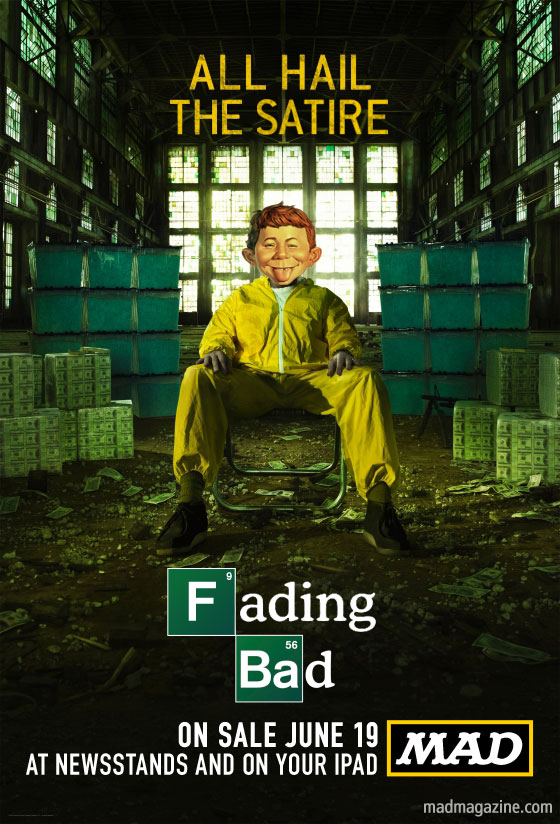
On Feeling No Urgency to Watch "Breaking Bad." And Being Untrendy


I have no desire to watch "Breaking Bad." None. Zero. Zip. Nada.

I watched a clip on youtube. It was entitled "I am the one who knocks." Very good line. Wish I had written it. I found the performances melodramatic and I just didn't care.

Oh, and, I don't own a TV.

I know some drug addicts and drug dealers quite intimately and their lives are chaotic, violent and ugly and their brains are mush. I avoid them; I avoid even thinking about them as much as I can, hard to do, because they are close to me. I don't think this show could tell me anything about drug addiction or drug dealing that I haven't had forced down my throat by real life.

Walter White, the lead character, is a schoolteacher who gets a cancer diagnosis and worries about his ability to survive economically.

Hello? I am a teacher who has gotten a cancer diagnosis who worries about my ability to survive economically. My hardcore "Breaking Bad" friends have never said word one to me about my real life dilemma. They are too plugged in to TV.

Have I ever seen "Breaking Bad"? No. Therefore, I can't judge it, right? Right. Here's the thing – I don't care.

Someone says to me, "You have to watch 'Breaking Bad'" and my response is, yeah, I think I have to clean the bathroom, grade some papers, take a walk, reread "War and Peace," nap, chew, snore, fart, ride a donkey to the bottom of the Grand Canyon, die, decompose, be reborn as a sweet flower or parasitic wasp … before I get around to watching "Breaking Bad." I mean, yeah, I'll do it. I just have some other things I need to do first.

I'm just not interested in trends like this. Some people hear "Trend!" and they rush forward panting. I look around and think, "Hey, that cloud looks like a map of the Languedoc region of France!"

I'm guessing that there is no one anywhere on planet earth who can forgive me for not feeling any urgent need to watch "Breaking Bad."

But my confession is about to get worse.

Everything about Harry Potter makes me want to wretch. If I swallowed poison, and needed to empty my stomach immediately and thoroughly, I would simply meditate on the word "quidditch." I've been stupid enough to post a critical review of one of the Harry Potter films on Amazon, and I was tongue lashed by tweeners. NOT an experience you want to have. Extensive showering was required, with antiseptic soap.

Are you still with me? I am guessing you are not.

But let me sink to the absolute lowest depths of human depravity.

I dislike the Beatles' music so much I get up, cross the room, and change stations if it comes on. The Beatles sound commercial. And that's exactly what they were. The Kinks, The Who, The Stones – I like any number of British Invasion bands who, unlike the Beatles, don't sound like they were recording background music for a Coca-Cola ad.

There is not language to express my gut-level hatred of football.

I like some big trends. I think Star Trek is cute, and Trekkies are even cuter. I love fall foliage. I like the Academy Awards. I attended one Bruce Springsteen concert and it was everything you've heard. All the disdain and disinterest I feel for trendy entertainments like "Breaking Bad" and Harry Potter is mirrored by the fanatical obsession I feel during presidential campaigns. I am a political junky.

I wonder about this. Is it genetic? Is there some molecule in my body that a scientist could isolate and place under the lens of a microscope to explain why I am immune to trends, in the same way that I am immune to poison ivy?

Am I alone? Are there others out there like me? Speak up, you untrendy people. Tell me your story. If there is enough of us, we could start a … trend … oh, wait – never mind.

Wednesday, September 11, 2013

Feeling Invisible and Worthless; Feeling Visible and Worthy

Months ago, in conjunction with a librarian, I made plans to read from my book "Save Send Delete" at her library. She picked the date – September 11. She also bought ten copies of the book to distribute to her book club.

Usually, when I read from "Save Send Delete" at a library or other venue, the people in the audience have never heard of me or the book. It is my job to introduce me and the book to them. I read from it and take questions.

Today is the first time I was in a room of about twenty people who had read the book. It was the first time in my life I'd ever been in a room with twenty people who had read my writing.

I normally have no fear of public speaking. This time I was nervous. What would these twenty readers, dedicated, serious people who care about books, think of my work? I was sure that they'd see nothing but flaws.

I entered the room and saw that the book club consisted mostly of folks in their fifties, sixties, and seventies. They looked at me in a no-nonsense way.

The librarian introduced me, and I kept my eyes down, while I blushed. Then I read an excerpt from the book that was pertinent to 9-11. It's the passage where I describe a self-identified "Muslim terrorist" who proposed marriage to me. Then I spoke about how I think it's important for us to critique jihad and gender apartheid, while not hating – indeed while continuing to love – our Muslim brothers and sisters.

I really had no idea how to assess the group's response to anything I was saying. They looked at me with no-nonsense time-weathered faces. By the way, to me "time-weathered" is a compliment. These were folks who had been around the block. No one was going to pull the wool over their eyes, or prevent them from speaking their mind fully and unashamedly.

A tall, very grim faced man brought up the Albigensians. I was prepared for that, and I said exactly what you might expect to say about the Albigensians.

A beautifully put together woman looked at me with SUCH penetrating "no bullshit zone" look and said, "I read your book. I think I understood it."

I wasn't sure what that meant. I still had no idea, really, what was going on.

We chatted more and then the librarian broke us up because she had to drive me to campus. She said that people who want my autograph on their book could come up and get it.

These folks who had lived full, long lives lined up.

They spoke to me one-on-one. They told me their personal stories. They showed me their copies of "Save Send Delete." One woman said, "I read the book really fast. Then I went back and reread it to savor it."

One woman's copy was full of multi-colored post-it page markers.

One woman had crumpled pages of paper with tiny handwriting in pencil. She had copied out by hand passages of the book that she liked to keep with her.

It was mind boggling. To see how these folks had been moved by my work.

Readers kept saying over and over, You are such a good writer … your command of language … I learned so much … so much to think about …

Here's the thing. I am alone. No family. Live alone. I spend the average day writing something that I send out for publication and getting back rejections. "Save Send Delete" was rejected six hundred times. I love my job but higher-ups insist I am unworthy of full time work because I don't hate Western Civilization enough.

I feel, and I am, invisible and worthless. Please don't be "nice" and contradict this. I am invisible and worthless. Visibility is a function of human eyes and nobody sees me. Worth is a product of human assessments and I am worthless.

As these readers unburdened their hearts to me and made evident how much my work meant to them, I felt *visible* and *worth something.*

It was unlike any other experience I've ever had. Ever. Ever. This is a first, for me.

There's a quote that goes around a lot, paraphrase, "Always be kind because everyone you meet is fighting a battle you know nothing about." It's sometimes attributed to Plato but there's no way it came from him; it doesn't reflect the worldview of Ancient Greece. One website attributes it to Rev. John Watson, who went under the pseudonym Ian MacClaren.

I don't think anyone knows how invisible and worthless I feel, and how much evidence – the hundreds of rejection letters on my writing, the hundreds of full time tenure-track jobs I've applied for that I've not gotten, the lifetime spent in burdensome solitude.

I know this about myself, though, and so I assume that others, just like me, are also fighting hard battles I know nothing about, so I strive to be kind, but of course I blow it frequently.

I know people who feel worthless, just as I do.

I want for those people the moment I had today. Where I received face-to-face recognition for my writing, something I always do alone, writing that usually goes unread, and, indeed, rejected.

It is very good to feel visible, and worthy.

So that is what I wish for you, gentle reader. To feel visible. To feel worthy.

And know that even if you haven't had that moment yet in your life, you will have that moment when you met with your creator. You will encounter a God who will say to you, I know how hard you tried. I know how much you accomplished. I appreciate it. Well done!

Until that day, do this for me, gentle reader. Tell someone how much you appreciate something he or she has done. Be like God: make another person's day. 

Source

Sunday, September 8, 2013

"An American Bride in Kabul" by Phyllis Chesler. Book Review

A Collection of Writer's Sketches, Rather Than a Fully Realized Book

Phyllis Chesler's "An American Bride in Kabul: A Memoir" is more a collection of a writer's sketches than a fully realized book. While reading this awkwardly spliced-together volume, I asked, "Where are the editors?"

Reading the book is a jarring experience, as the reader is shunted from one topic, and one genre, to another. Approximately forty percent of the book is an annotated bibliography, a listing of books and films about Islam, with Chesler's mini-reviews along with extensive quotes from the texts. Some of the book consists of excerpts from Chesler's 1961 diaries. Some of it is a transcript of her interviews with her Afghan husband. Chesler sometimes writes in the present tense; sometimes in the past.

There are at least three misuses of the word "literally." The editor let slip this hapless simile: "where icy storms are as common as ice storms." As always in badly organized writing, points are repeated, without ever being developed to full impact.

The lack of discipline, and attendant lack of clarity, matters. Criticisms of Islam are explosive. Leftists in the West have denigrated Western Civilization and have inoculated Islam against any critique. Those who critique Islam are demonized as "racists," and "Islamophobes." Of course, no such demonization adheres to critiques of Christianity, the left's whipping boy and scapegoat.

On the other hand, Muslims themselves are also victimized. Most Muslims are decent human beings. Criticism of Islam must be delivered in a respectful, coherent manner. Phyllis Chesler obviously loves her Muslim family and friends, but "An American Bride in Kabul" fails at coherence.

The "memoir" portion occupies the opening pages of the book. This portion does not offer the consistently vivid, probing, intimate details that make for a great memoir. There was so much I wanted to know that I could not glean from Chesler's account, which is more "telling" than "showing." Chesler tells us that her Afghan father-in-law was something like a God in his household, but there are no vivid scenes that bring his character to life. I wanted to *see* Kabul in the pages of this book, and I never did. I finally did a Google image search. I didn't get a strong sense of the characters Chesler encountered, until a couple of well-written scenes close to the end of the memoir portion. Chesler describes her mother-in-law persecuting her because she is Jewish, and Chesler describes her mother-in-law tormenting a slave-like servant. Good scenes, but the memoir portion needed more of them.

The memoir portion, brief as it is, never reads smoothly. Chesler inserts excerpts from her diaries and mentions of other books.

The rest of the book is a hodgepodge of thoughts, genres, and points. Chesler talks about her continued relationship with her Afghan ex-husband and his second wife, she talks about 9-11, and she talks about the Soviet invasion.

An editor could have helped this book. It could have been organized as an anthology. There could have been coherent, powerful chapters devoted to the memoir portion, the political portion, the eyewitness history of the Soviet invasion, and the annotated bibliography portion.

Isolated elements in the text that intrigued me and that I wished had been better developed include the following.

Chesler, citing other authors, points out that Jews were persecuted in Afghanistan, in accord with the Koran, and Islamic tradition, and that Afghanistan allied itself with the Nazis. Rich Afghans, like the family she married into, got rich by fleecing persecuted Jews. Nazis found refuge in Afghanistan after WW II.

British explorers and travel writers like Freya Stark and Sir Richard Burton often romanticized Muslims and demonized Jews. TE Lawrence was an exception.

Some attribute explosive Islamist violence to suppressed libido. Males deprived of women blow up, literally and figuratively. Chesler says that hunger for a father's love may also play a role. Polygynous Muslim patriarchs have only so much time for each son, and power play them off against each other.

Hungry and frightened by her mother-in-law's abuse, Chesler converted to Islam in an attempt to get more food and better treatment. She says she will never forgive herself for this. Even after her forced conversion, her mother-in-law spews the word "Jew" at her repeatedly, spits at her, and comes close to killing her when she is bedridden with hepatitis.

The most provocative sentence in the book: the West could stop funding terrorism by "refusing to buy Saudi oil, taking over their oil fields, or investing in other sources of energy." YES.

The biggest dropped ball in "An American Bride in Kabul" is this. Phyllis Chesler used to be one of the people she now rants against. As a youth, she joined a leftist, anti-religious organization. She was a "Bohemian American." She didn't take religion very seriously. She seems to be a bit anti-Christian. She didn't realize that America and the West are special. When she escaped from Afghanistan, she literally kissed the ground on return to America. "The next time I visit Kabul it will be with the Marines," she says.

She still travels in leftist circles. She meets directors of battered women shelters who utterly refuse to acknowledge the reality of honor killing because to do so would be "racist." She has friends who insist that America deserved the 9-11 terror attacks, and that the dead from the WTC were guilty people who deserved to die. Chesler is uniquely situated to offer a devastating critique of leftists and Cultural Relativism and their complete failure to come to terms with jihad and gender apartheid. Perhaps Chesler has offered that critique in other works; in "American Bride" the criticism is vitiated by being scattered throughout an unorganized text.

I recommend other books on the topics Chesler covers:

Elizabeth Warnock Fernea "
Guests of the Sheikh"

Robert Spencer's "Did Mohammed Exist?" Review
here

Ayaan Hirsi Ali's "Infidel" review
here.

Nawal el-Sadaawi's "Hidden Face of Eve"

"Speak Bird Speak Again" review
here.

Wafa Sultan "A God Who Hates" review
here.

PBS Frontline documentary on the Dancing Boys of Afghanistan,
here.

Tuesday, September 3, 2013

The Victorian Fairy Tarot: A Review


The Victorian Fairy Tarot is the single most beautiful original tarot deck I have ever seen. When I first went through the cards, I was so overwhelmed that I had to monitor my own breath.

Decades ago, when I purchased my first tarot deck, I never thought that I would become a collector. I'm a devout Catholic, for one. As a creative writer and a teacher of anthropology, I am fascinated by tarot as an art form and as an expression of humanity's wrestling with the big questions. I love comparing how different decks treat the themes encapsulated in a given card. Tarot decks offer mini voyages into the human mind, perception, interpretation, communication, morality, soul, and heart.

As much as I love tarot decks as reflections of human depth, I am often less than taken by the aesthetic qualities of tarot art. It often isn't quite as good as the art in, say, illustrated children's books or in advertising. There is an overabundance of kitsch: willowy goddesses very unlike the real life Pagans one meets at neighborhood potlucks, and romance-novel, cover-model gods. Everyone tends to be a twenty-something, with few children or old people. A notable exception is the excellent Druidcraft Tarot which includes saggy breasts on grey-haired queens and large bellies on balding kings. All too often in tarot decks nature, for all the neo-Pagan stated embrace of it, is a vague blur of green, with again the Druidcraft Tarot a notable exception, depicting as it does recognizable plants.

The decks with really good artwork tend to take pre-existing art by celebrated artists and repurpose that art for a tarot deck. One example: the Lo Scarabeo Tarot of the Thousand and One Nights. That deck uses the exquisite Orientalist artwork of Leon Carre. These cards are eye-poppingly gorgeous, but Carre was not painting for Tarot, so sometimes the relationship between the card and its meaning is vague.

Kat Black has taken medieval and Renaissance art to make her collage decks, the Golden Tarot and the Touchstone Tarot. Both decks are among the most beautiful of tarot decks.

Okay, enough about other decks. Back to the Victorian Fairy Tarot.

This is the finest original art I've ever seen on a Tarot deck. It is every bit as good as the artwork you might see in an award-winning children's book. Lunaea Weatherstone, the deck's author, dedicates the book to "The spirits of Arthur Rackham and J. M. Barrie." J. M. Barrie was the Victorian children's author who wrote "Peter Pan." Arthur Rackham was a Victorian children's book illustrator. Victorian tarot author and illustrator Lunaea Weatherstone and Gary A Lippincott – your reach did not exceed your grasp. Your work is every bit as fine as that of your heroes.

I identify real species of birds on these cards, real plants, real dilemmas that the natural world presents. The seven of spring – the deck's analogue to the seven of wands – depicts a farmer trying to shield his grain from birds. This is an intelligent and apt illustration of the seven of wands' concept – struggling and succeeding in spite of significant odds. There's a very believable Norway rat stealing milk on the seven of winter – the seven of swords. Temperance depicts fennel, wormwood, and absinthe, all as recognizable as they would be in a field guide. For all of his realism, Lippincott conveys nature's magic, as well. This is the natural world as it looked to you through the enchanted eyes you had as a child.

The deck honors the "Victorian" component of its name, as well. The Emperor looks a bit like Prince Albert, Queen Victoria's husband, with his mustache, muttonchops, and butterfly wings. Okay, the butterfly wings are an added delight, and not historically accurate. The Hierophant is a Vicar, delivering a sermon to English country folk. The nine of spring is a Victorian eccentric occupying his cabinet of curios – skulls, pressed plants, botanical drawings, feathers. One thinks of Victorian explorers like Charles Darwin who traveled the world collecting artifacts.

The Major Arcana card 8, Strength, is meant to convey, strength, yes, but a certain kind of strength, the mastery of self that a woman who tames a lion exhibits. In the Victorian Fairy tarot, card 8 is a barefoot, grey-haired lady. She is surrounded by beautifully realistic honeybees, a wicker hive, and clover. She exhibits her strength by stroking one of her charges as if it were a pet. A beatific smile crinkles her aged face.

Lippincott's use of light is entrancing. The Hermit card is an old man reading in his oak tree house, lit with the golden glow of a lantern. A grey and white owl, perhaps a saw-whet owl, perches a bit back, out of the light, in the grey gloom. I am warmed by, and drawn into, this image.

But wait! There's more! The minor arcana cards are every bit as sublime as the majors. And even more. When I go through a new deck, I rapidly discern that some cards were just not worth the price of admission. I assess decks as fifty percent worth it, or sixty. This deck is one hundred percent worth it. Every card is lovely and intellectually provocative. Every interpretation is worth a pause, worth some thought.

Lippincott's use of color is masterful and authentic; this is the palette of the Victorian era. The deck never strays from its theme; it never strikes discordant notes that make you question what a given interpretation is doing in this deck.

Lunaea Weatherstone's texts combine a bit of fairy whimsy, a bit of Victorian history or culture, and a bit of sound common sense. Each major arcana card is preceded by a quote from a Victorian author. Every card is followed by a pithy "in a nutshell" summation. Wands are spring, cups are summer, pentacles are autumn, and swords are winter, and that scheme works beautifully.

****
"Can A Christian Read Tarot Cards?" blog post here.